


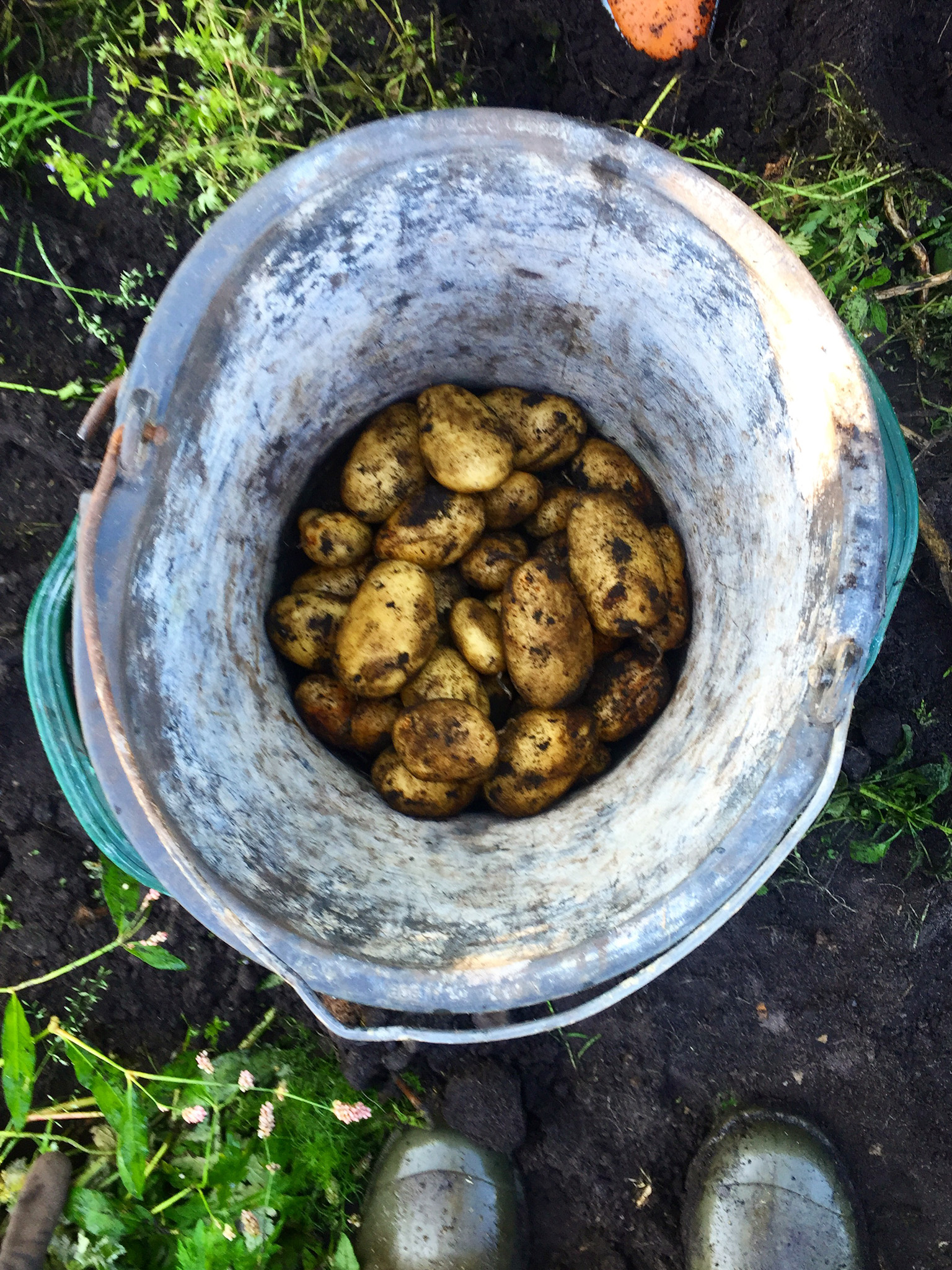
I have so much to write about, especially today when my mind is focused on gatherings, ageing parents, mutual friendships and whether I am actually in menopause—but here I am writing to you about potatoes.
Consider this my love letter to potatoes.
Not any potatoes, though, but organic potatoes grown in fertile, rich soil. The kind I once dug up myself on an organic farm in Denmark, muddy boots and all.
AKA the Special Kind.
You see, the thing is, during my many years of being obsessed with organic farming and, more generally, just wanting to know where my food comes from, I have learned that there is quite a lot of controversy surrounding potatoes.
Yes, the beige and often perceived boring vegetable has a somewhat scandalous reputation.
And, to be absolutely fair, more often than not, its bad reputation is well deserved.

Why am I having a dig at potatoes?
The issue I have with potato farming is not really potatoes at all. It is how we grow them.
Potatoes are one of the most widely grown food crops in the world. Per se, not an issue for me. But I do have a massive issue with monoculture.
Mono what? You might ask.
Monoculture is where the same crop is grown over hectares and hectares of land.
It might sound efficient—and economically, it often is—but nature thrives on diversity. In fact, we as a species rely on it.
Think about a healthy piece of farmland, or even a small veggie garden.
There are different things growing. Crops might be rotated. There are bees, birds, insects and all sorts of ‘goggas’ crawling and flying around.
The soil itself is full of life and there is life around the soil.
That is biodiversity.
When we grow the same crop over vast areas of land, year after year, we slowly remove that diversity.
The soil becomes depleted, there is less life around the crop and the farm becomes increasingly dependent on fertilisers and chemicals to keep anything growing.
Some of those chemicals, alarmingly, can include pesticides containing PFAS—better known as “forever chemicals.”
The result can be landscapes that produce enormous amounts of food but support, increasingly less life.
All the drama
And as if all of this wasn’t enough drama for one beige vegetable, potatoes aren’t particularly easy to grow either.
They are vulnerable to disease and pests and yet potatoes are the fourth most widely eaten crop in the world.
You see the predicament?
Massive demand plus a crop highly susceptible to pests and disease equals, heavy pesticide use.
The Special Kind
This is why, when I see organic potatoes, I get excited.
Finding a bag of potatoes grown in healthy soil, by a farmer who has chosen to grow food differently, feels worth celebrating.
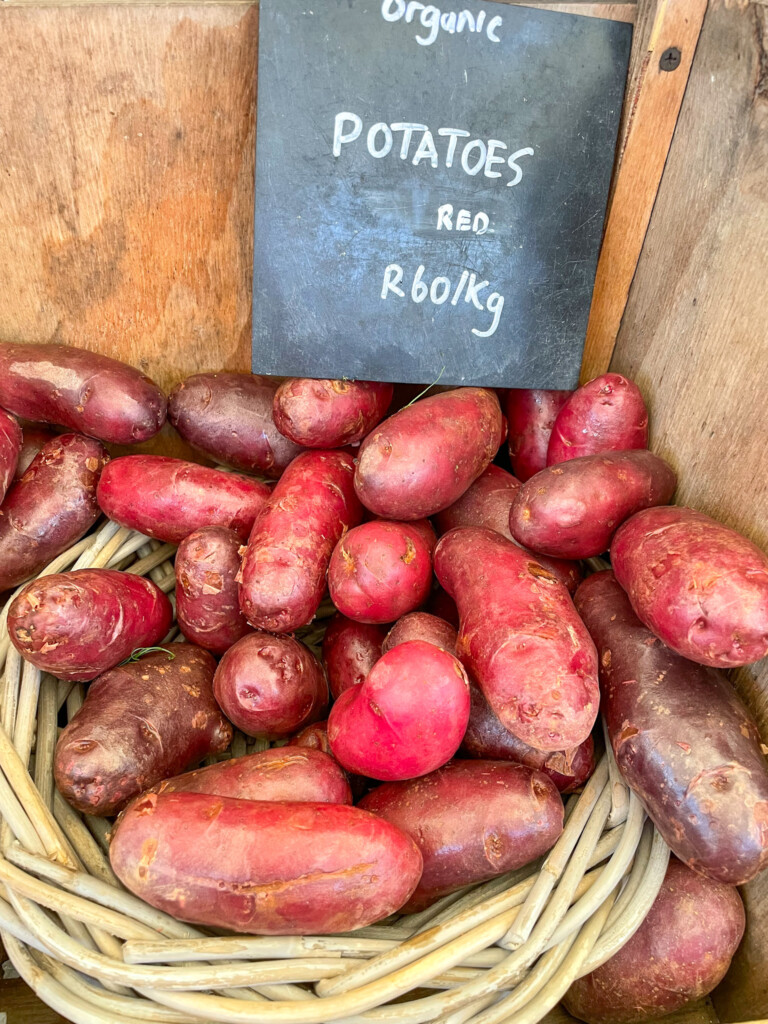
Right now, potatoes are in season and you can find beautiful organic ones from Wild Organics and Those Who Harvest.
Buy them. Cook them. Eat them.
Three ways to celebrate a very good potato
And to celebrate their newly elevated status, I am kicking things off with three ways to cook them.
If, like me, your love for potatoes extends well beyond three recipes, I have gathered all my potato recipes here.
The simple one
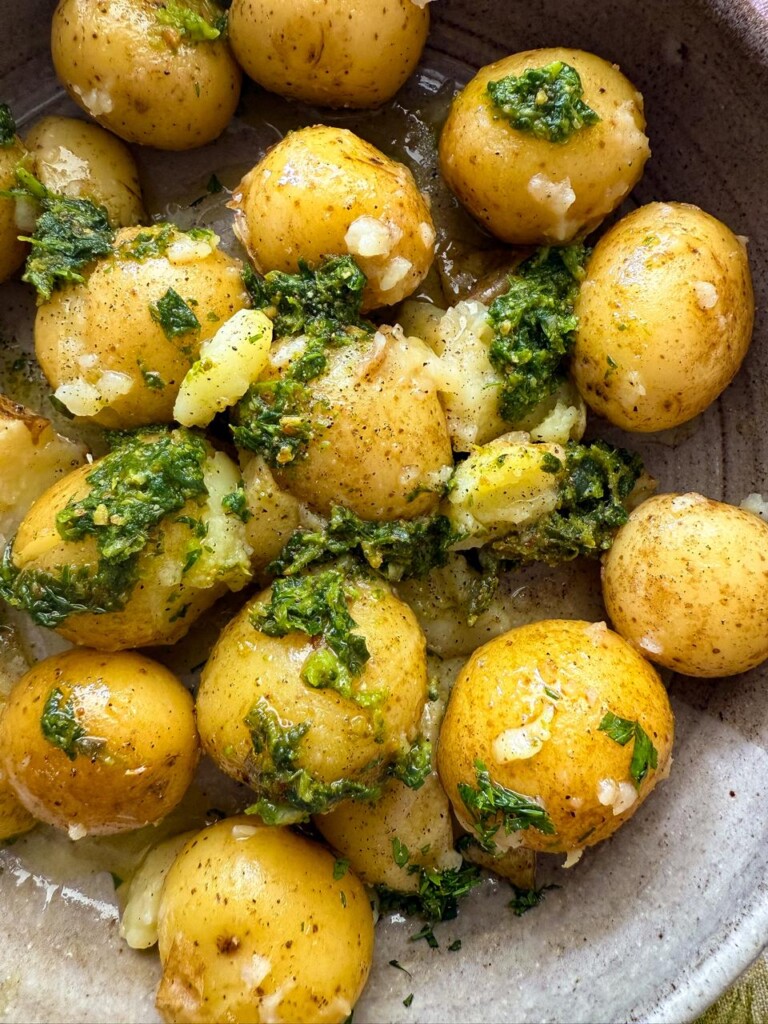
I love the texture of a just-boiled and then slightly steamed baby potato, rough skin still on, dripping with new-season olive oil, herbs and plenty of salt and pepper.
Best eaten when they are actually still too hot to eat, followed by the mandatory mouth burn because you couldn’t resist.
Recipe Link for Members (here)
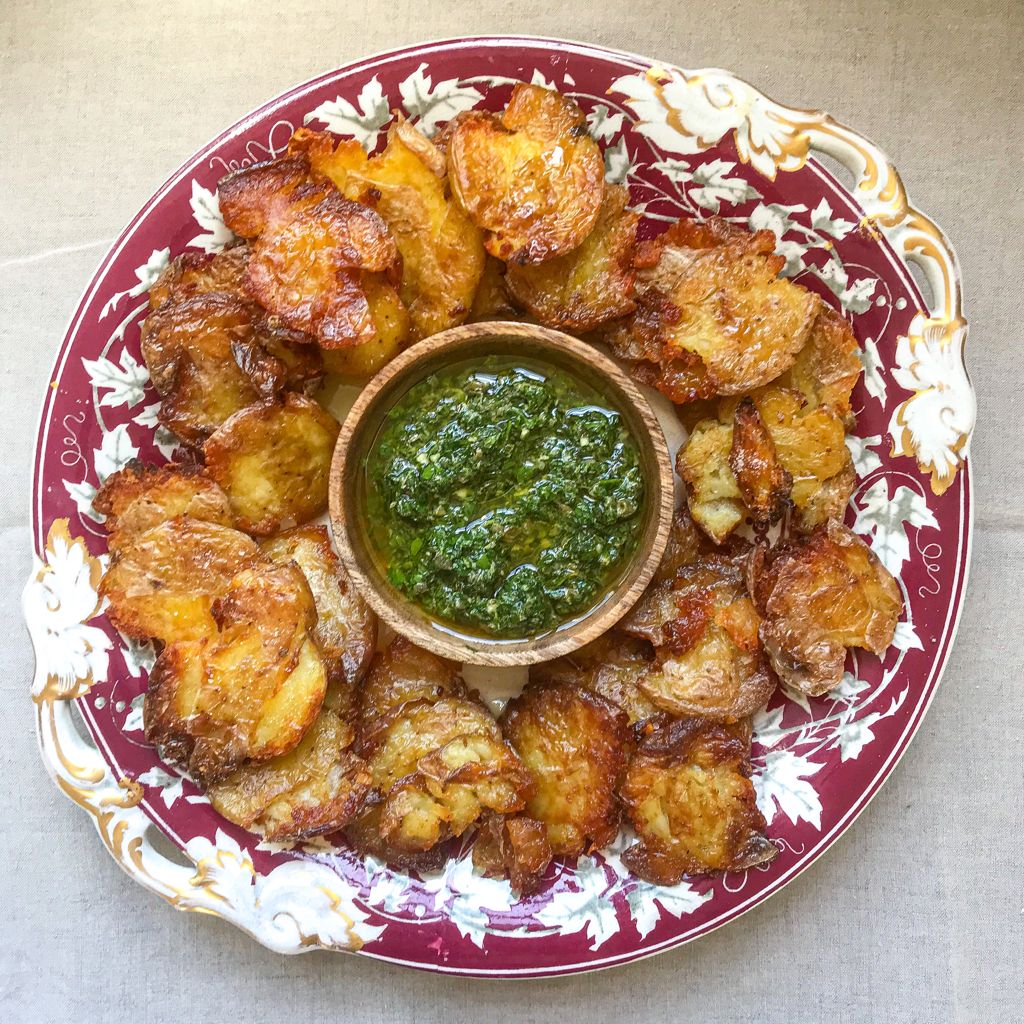
The crunchy one
The reason we love potatoes, right?
Boiled. Steamed. Smashed.
Then cooked in plenty of olive oil and an unreasonable amount of sea salt until deeply golden and crunchy.
Dunked into pesto or salsa verde.
Bliss.
Recipe Link for Members (here)
The unusual one
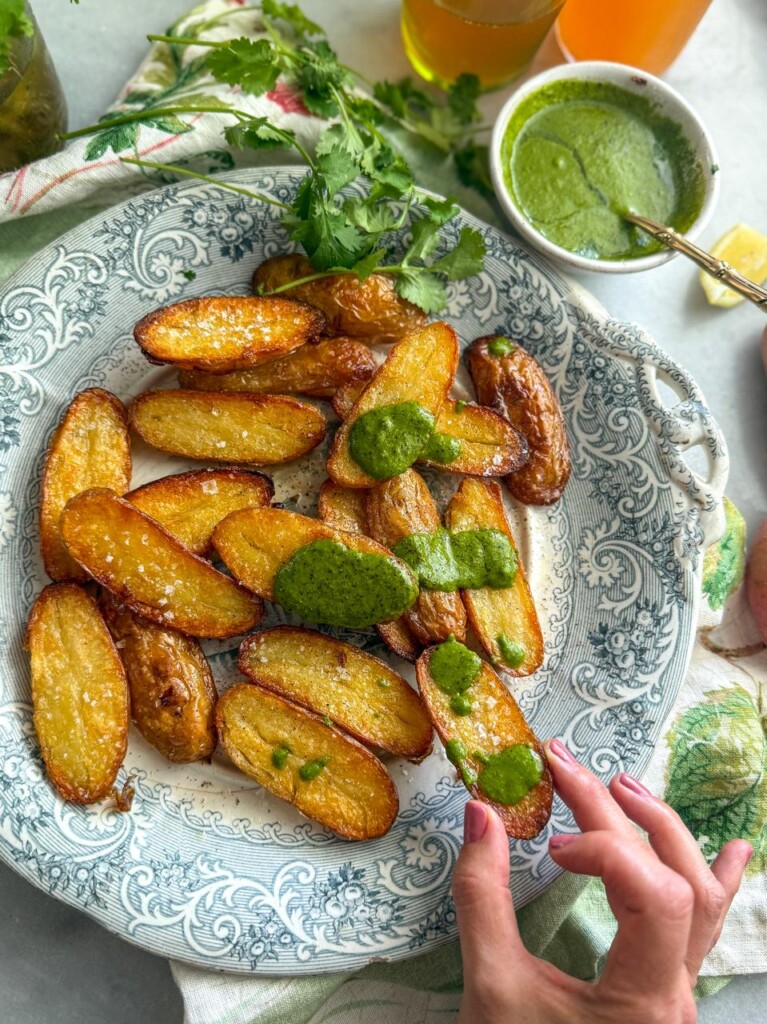
Thanks to the Spanish, I have now learned that my love for salt has no bounds.
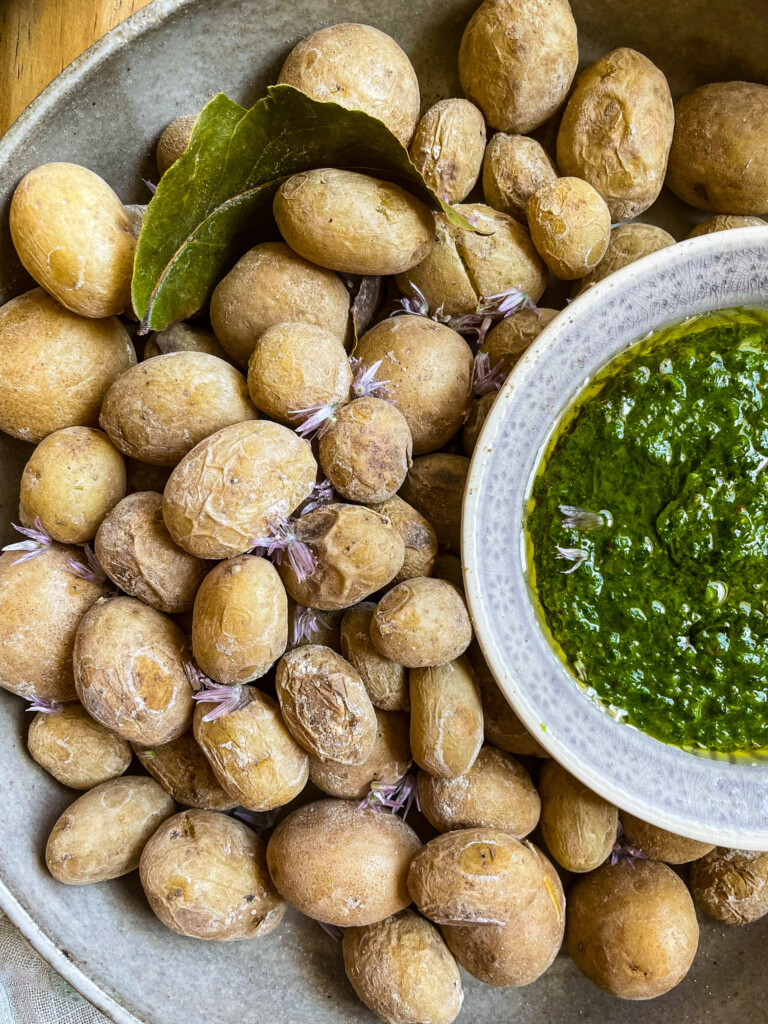
Here, potatoes are cooked in plenty—and I mean plenty—of salt until their skins become wrinkled and white.
Roasted until they become a special kind of crispy, then served with a zesty, slightly punchy salsa verde.
Possibly the best thing on the table.
Why does any of this matter?
OMG, where do I begin?
The old me would now go into full prosecutor mode—my previous life—and try to convince you to buy organic produce and therefore support better farming, healthier soil, greater biodiversity and, well, everything. But the new me isn’t going to do that.
Instead, I am simply going to ask you to become curious.
- Where was this potato grown?
- Who grew it?
- And how?
Because perhaps one of the simplest ways we can remain connected to our food is to start asking questions about the ordinary things we eat.
Even potatoes.
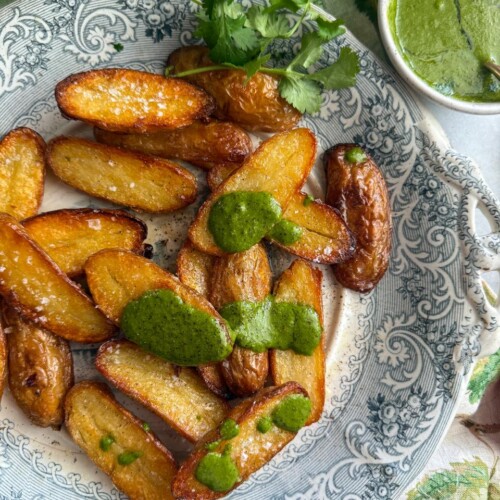
Slow Roast Crispiest Spanish Potatoes with a Fab Green Sauce
Equipment
- powerful food processor or NutriBullet
Ingredients
- 1 kg ORGANIC potatoes (please say you have read the above?)
- 200 g good salt (I like Himalayan Rock Salt)
- extra virgin olive oil
Green Mojo Verde Sauce
- 100 ml extra virgin olive oil
- 20 ml apple cider vinegar
- 1 mild green chilli deseeded
- 1 fat garlic clove
- 100 g organic coriander
- 50 g organic flat leaf parsley
- 1/2 green pepper halved cored and deseeded
- 1/2 tsp ground cumin
- salt & pepper
Instructions
- Place the potatoes in a large saucepan and cover with cold water generously. Add the 200g salt and bring the water to a boil. Lower the heat and leave the potatoes to simmer gently until just tender. Chef's Note: it's important not to overcook the potatoes. Drain well, and let them steam in the colander until cool enough to handle, cut in half lengthways.
- Meanwhile, preheat the oven to 190c.
- To make the green sauce, place all the ingredients in a blender and blitz until a thick pesto-like sauce. Season to taste. Set aside until needed.
- Pour a good layer of olive oil into a roasting tray. Add the potatoes cut side down and sprinkle - with yes - more salt.
- Roast for 35-40 minutes turning once, halfway, until they are crisp and golden. Serve with the mojo verde on the side or drizzled over the top. This is so good - enjoy!
If you enjoyed reading this, there is plenty more food, recipes and gathering around the table inside Adré’s Kitchen. You can read more about becoming a member here.
x Adré
